
인코넬 718의 터닝가공에서 인서트 절입각이 경계마모 억제에 미치는 영향
Abstract
Inconel is a representative super-alloy with excellent heat resistance, abrasion resistance, and corrosion resistance, and used as a material for key aerospace components. It is a difficult-to-cut material with a very short tool life owing to its low thermal conductivity, excellent high temperature strength, and excellent work hardening ability. In this study, machining characteristics were identified based on the entering angle in the Inconel 718 turning process. A finite element simulation was performed to derive the effective entering angle range to suppress notch wear, which is the main cause of end-of-tool life. Additionally, cutting temperature, stress, and pressure distribution were analyzed. Through comprehensive analysis of finite element simulations and machining experiments, an effective entering angle range was derived to suppress notch wear in the turning process of Inconel 718.
Keywords:
Inconel, Turning process, Entering angle, Machining characteristics, Notch wear, Tool lifeAcknowledgments
이 연구는 산업통상자원부 산업기술혁신사업(과제번호 : 10067 065, 항공・에너지 플랜트 고경도 내열합금 가공용 코팅초경/cBN/ 세라믹스 공구개발)의 지원 하에 수행되었습니다.
References
-
Li, H. Z., Zeng, H., Chen, X. Q., 2006, An Experimental Study of Tool Wear and Cutting Force Variation in the End Milling of Inconel 718 with Coated Carbide Inserts, J. Mater. Process. Technol., 180:1-3 296-304.
[https://doi.org/10.1016/j.jmatprotec.2006.07.009]

-
Toubhans, B., Fromentin, G., Viprey, F., Karaouni, H., Dorlin, T., 2020, Machinability of Inconel 718 during Turning: Cutting Force Model Considering Tool Wear, Influence on Surface Integrity, J. Mater. Process. Technol., 285 116809.
[https://doi.org/10.1016/j.jmatprotec.2020.116809]
-
Musfirah, A. H., Ghani, J. A., Haron, C. H. C., 2017, Tool Wear and Surface Integrity of Inconel 718 in Dry and Cryogenic Coolant at High Cutting Speed, Wear, 376-377 Part A 125-133.
[https://doi.org/10.1016/j.wear.2017.01.031]
-
Zhuang, K., Zhu, D., Zhang, X., Ding, H., 2014, Notch Wear Prediction Model in Turning of Inconel 718 with Ceramic Tools Considering the Influence of Work Hardened Layer, Wear, 313:1-2 63-74.
[https://doi.org/10.1016/j.wear.2014.02.007]
-
Sharman, A. R. C., Hughes, J. I., Ridgway, K., 2015, The Effect of Tool Nose Radius on Surface Integrity and Residual Stresses when Turning Inconel 718TM, J. Mater. Process. Technol., 216 123-132.
[https://doi.org/10.1016/j.jmatprotec.2014.09.002]
-
Grzesik, W., Niesłony, P., Habrat, W., Sieniawski, J., & Laskowski, P., 2018, Investigation of Tool Wear in the Turning of Inconel 718 Superalloy in terms of Process Performance and Productivity Enhancement, Tribology International, 118 337-346.
[https://doi.org/10.1016/j.triboint.2017.10.005]
- Kwon, H. W., Kim, J. S., Kang, I. S., Kim, K. T., 2010, Machining Characteristics Evaluation of Super Heat-resistant Alloy(Inconel 718) according to Cutting Conditions in High Speed Ball End-milling, Journal of the KSMTE, 19:1 1-6.
-
Grguraš, D., Kern, M., Pušavec, F., 2018, Suitability of the Full Body Ceramic End Milling Tools for High Speed Machining of Nickel Based Alloy Inconel 718, Procedia CIRP, 77 630-633.
[https://doi.org/10.1016/j.procir.2018.08.190]
- Sandvik Coromant, viewed 8 Oct. 2020, Training Handbook, M etal Cutting Technology.
-
Lee, D. H., Yoon, J. C., Lee, J. H., Kim, J. S., 2018, Drill State Monitoring Multiple Cutting-Process Signals in CFRP Microdrilling, Journal of the KSMTE, 27:5 401-408.
[https://doi.org/10.7735/ksmte.2018.27.5.401]

Senior researcher in Daegu Mechatronics and Material Institute.His research interest is Cutting tool and Machining process monitoring.
E-mail: jy.koo@dmi.re.kr

Senior researcher in Daegu Mechatronics and Material Institute.His research interest is Machine tools and Cutting tools.
E-mail: kdg0830@dmi.re.kr
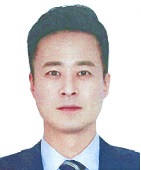
Senior researcher in Daegu Mechatronics and Material Institute.His research interest is Cutting tools and Cutting process.
E-mail: iskang@dmi.re..kr
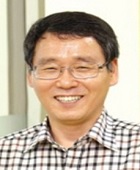
Principal researcher in Daegu Mechatronics and Material Institute.His research interest is Cutting tools and Materials.
E-mail: ycjung@dmi.re.kr
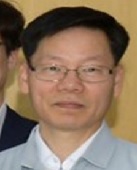
Research center manager in Korloy.His research interest is Cutting tools and Tool manufacturing.
E-mail: yhkim@korloy.com